Case study, Student support, Product design

Archived concept, visual record restored

Next Step. Support from school to first job.

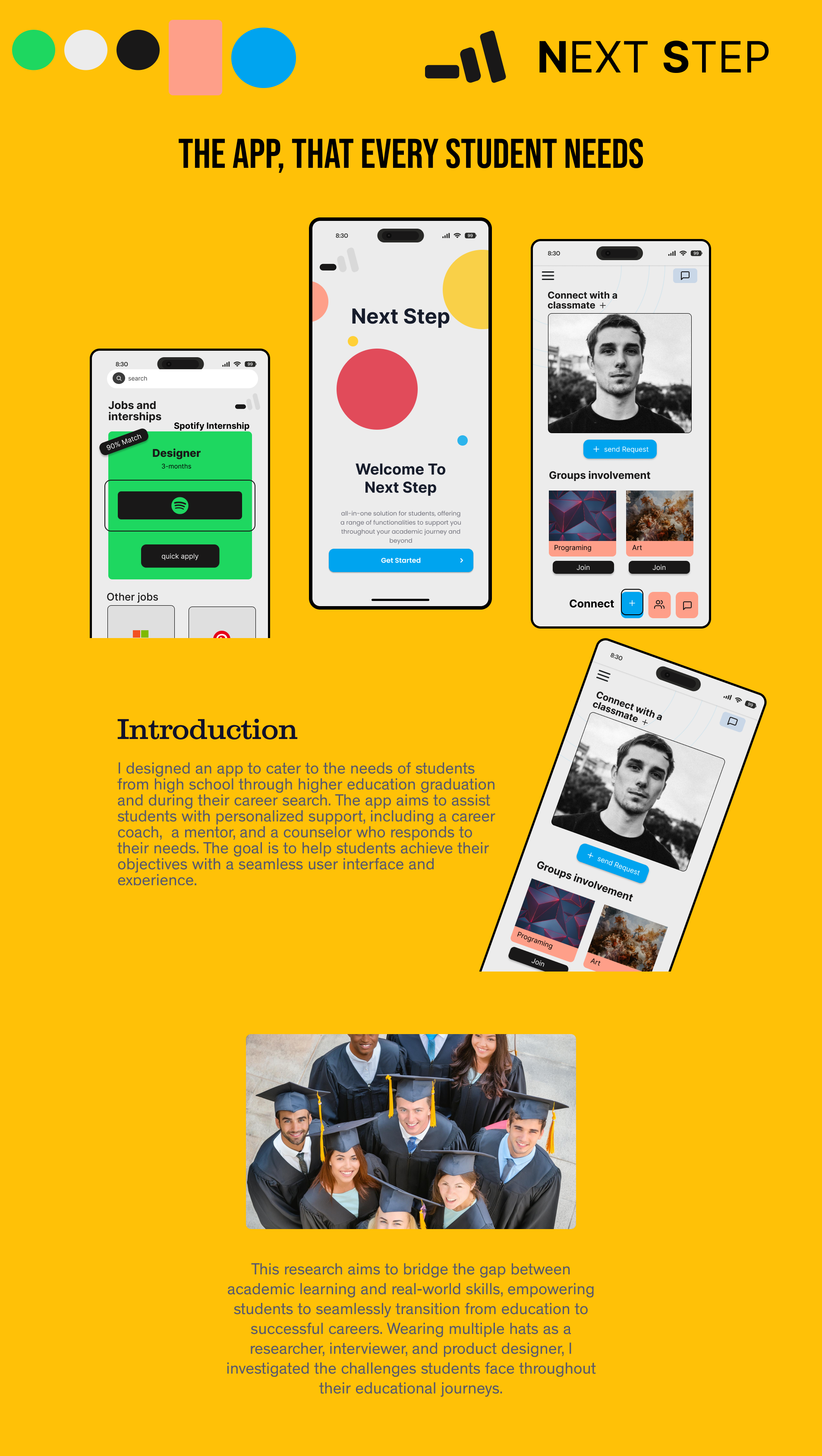
Students often navigate classes, mentors, peer groups, internships, and career advice across disconnected systems. Next Step brings those needs into one mobile experience built around timely, personal support.

  • UX
  • Product
  • UI
  • Figma
Next Step mobile experience for student support
Role
Researcher + product designer
Users
High school + college students
Evidence
Retrospective notes + archived screens
Output
IA + mobile prototype

The work

A centralized portal for student navigation

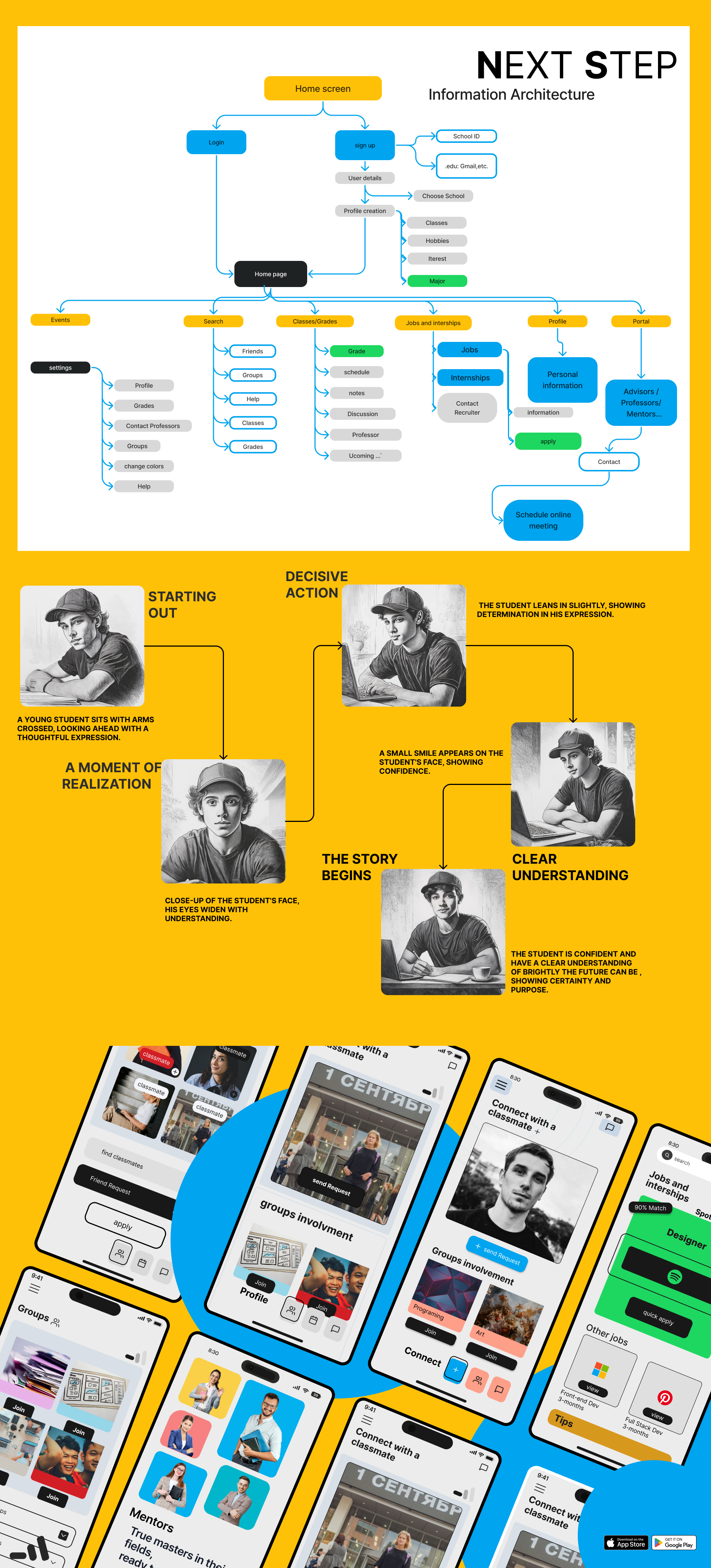
Next Step student support app flow and features

Artifact record

The full mobile journey, not a single hero crop.

The surviving project archive is primarily visual. These screens document the proposed information architecture and product direction; original participant counts and raw study materials are not presented as verified evidence.

Next Step extended mobile flow
Student journeyExtended flow
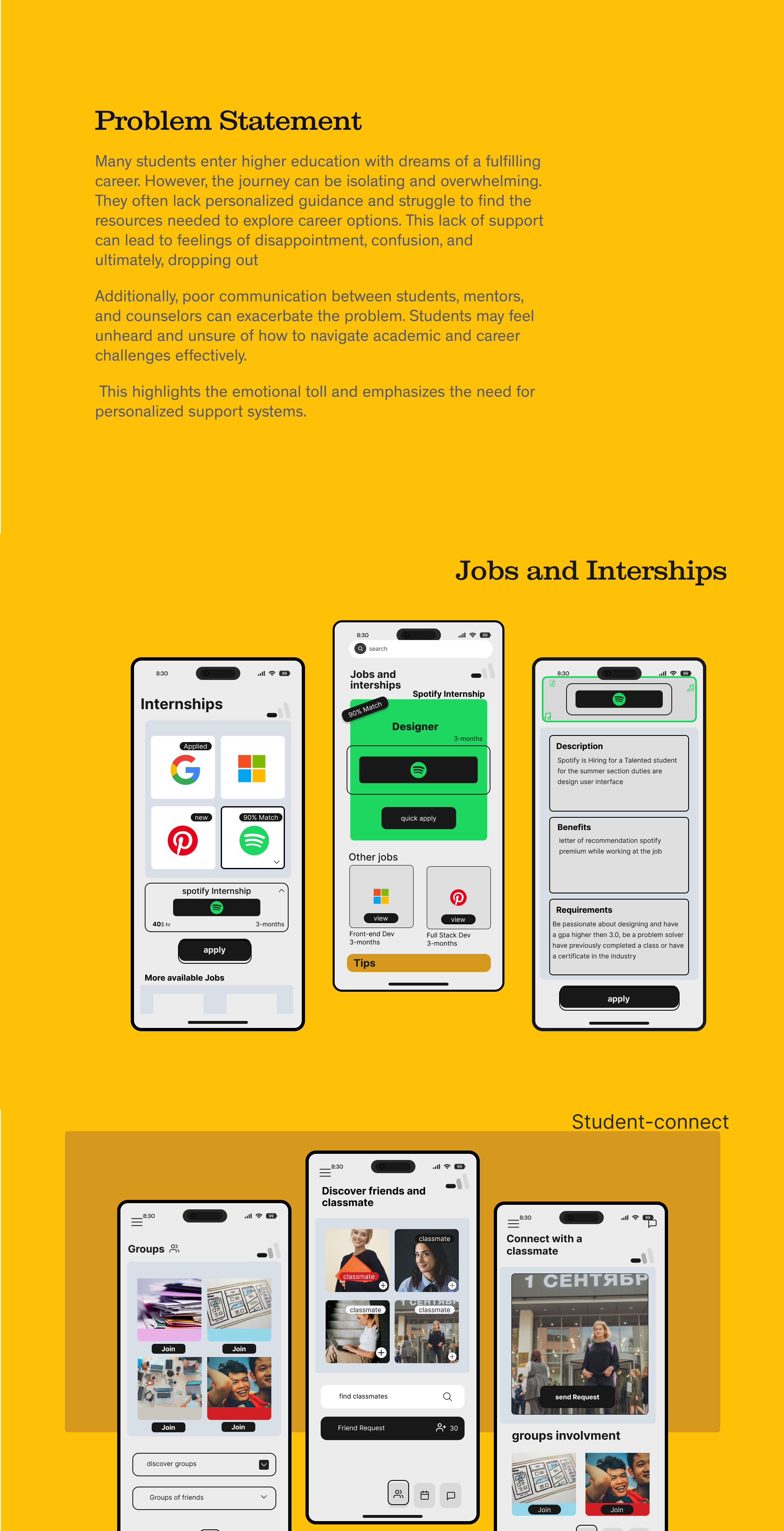
Next Step support and community screens
Support + communityMobile UI
Next Step jobs and opportunities screens
Jobs + opportunitiesMobile UI

Problem

Students are expected to assemble their own support system.

Many students enter higher education with career goals but limited personalized guidance. Academic resources, mentors, peer communities, and job opportunities are scattered, making an already demanding transition more isolating.

Poor communication between students, mentors, and counselors can leave people unsure where to ask for help or how to move from coursework toward a career.

Research

Look at the journey from more than one angle.

Student interviews

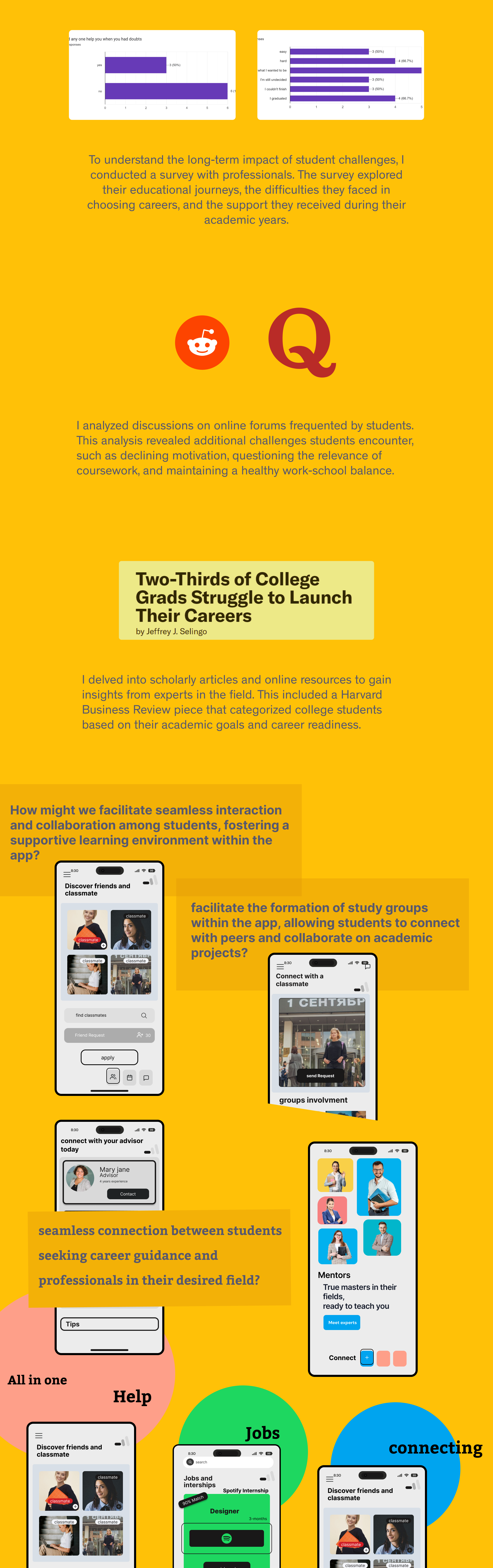
I gathered firsthand accounts about time management, communication with professors, academic guidance, and work and life balance.

Professional survey

I asked working professionals about their education, career decisions, and the support they received while studying.

Community observation

Discussions in student forums surfaced motivation, workload, career uncertainty, and other concerns people may not raise in formal interviews.

Secondary research

Articles and academic resources added context about the difficult transition from graduation into stable career work.

Design response

One home, five kinds of help.

The mobile concept combines peer discovery, study groups, mentors, classes, jobs, and internships. I designed the home as a starting point in Figma, instead of treating each need as a separate portal.

Reflection

Research should finish shaping the question before the UI starts answering it.

The original retrospective identified two important improvements: spend more time completing the UX process before committing to the interface, and give interview participants more uninterrupted space to explain their experience. Both would make the final solution narrower and better grounded.

Next

Sprinkler Repair System

A wet yard should reach Ben, not a brochure.

Next case All work