UI practice, Reverse engineering, Low fidelity

Independent study, unaffiliated with Finch

Finch. Mapping an existing app before styling it.

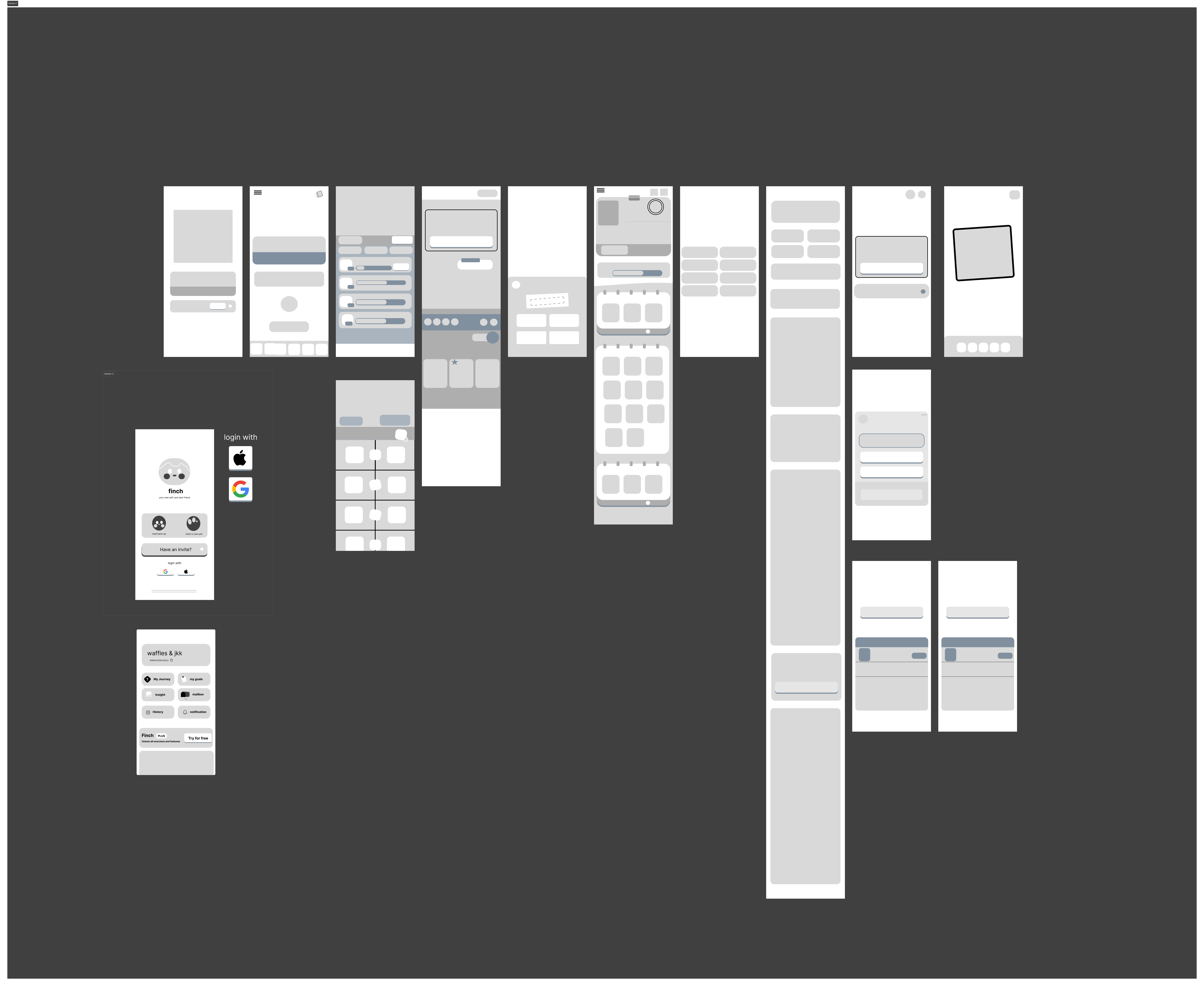
A practice exercise in reconstructing a mobile product as low-fidelity wireframes. The goal was to understand navigation, repeated components, screen states, and the relationship between onboarding and the everyday product.

  • UI
  • Flows
  • Figma
Large low-fidelity Finch app wireframe board showing onboarding, authentication, home, discovery, profile, forms, and long-scroll mobile screens
Section 1, complete wireframe board6575 x 5384 px
Type
Existing-app study
Fidelity
Low-fidelity wireframes
Focus
Flows + component patterns
Tool
Figma practice

What I mapped

One product, several modes of use.

Entry

Onboarding, invitation, Apple and Google sign-in, and the decisions required before reaching the core experience.

Everyday use

Home, navigation, discovery, progress, cards, lists, and the repeated controls that create familiarity between screens.

Deeper states

Forms, profiles, settings, content detail, long-scroll layouts, and the transitions between overview and focused tasks.

Practice method

Remove the visual brand to expose the system underneath.

I reduced the reference interface to neutral blocks, spacing, hierarchy, and interaction patterns in Figma. That made it easier to see which elements were reusable components and which screens required a distinct structure.

This is reverse-engineering practice, not an original Finch product concept. Finch and its brand belong to their respective owners; the artifact is shown only to document my learning process.

Reflection

Wireframes are useful when they explain behavior, not decoration.

The board helped reveal where the app relies on recurring cards, navigation patterns, and progressive disclosure. A stronger next pass would annotate the paths, separate observed behavior from assumptions, and test the map against a short task list.

Explore

Selected work

Return to the evidence-backed product case studies.

All work